
When Hoke County residents pay property taxes, sales taxes and other government-related fees throughout the year, it can sometimes be difficult to see exactly how those dollars return to the community, but the newly adopted Hoke County 2026–27 budget provides an important picture of the services, programs and responsibilities county government must support during the coming fiscal year. The Hoke County Board of Commissioners moved through the annual budget process during the spring and early summer, including a public hearing on June 15, before the county published its FY 2026–27 budget ordinance at the beginning of July, creating a financial plan intended to maintain and support the current level of county services while operating at the county tax rate. For residents, the budget is much more than a collection of numbers because it determines how resources are directed toward schools, public safety, social services, government operations, recreation, infrastructure and many of the everyday services that help Hoke County function.
Understanding where the money comes from is an important starting point because county government does not operate solely on property taxes, even though property taxes represent one of its largest sources of locally generated revenue. The county manager’s proposed General Fund budget projected approximately $39.7 million in ad valorem property-tax-related revenue, including current property taxes, motor-vehicle taxes and related collections, while approximately $17.6 million in sales-tax revenue was projected from several state-authorized sales-tax sources. Those figures demonstrate why both property values and local economic activity matter to county finances, because a stronger tax base can provide additional resources for services without requiring the same level of pressure on individual taxpayers.
One of the largest responsibilities reflected in the county budget involves public education, because county government plays an important financial role in supporting Hoke County Schools even though the school system is governed separately by the Hoke County Board of Education. In the county manager’s proposed General Fund budget, approximately $12.95 million was identified for public schools, including roughly $8.4 million for current school expenses, approximately $1.8 million for school capital needs, and additional amounts connected with school-related debt obligations. These investments matter to families throughout Hoke County because county funding can influence facilities, maintenance, equipment, operational needs and the overall environment in which students and educators work every day.
Public safety represents another major area where county spending becomes highly visible to residents, because the community depends on law enforcement, emergency management and other response services during situations in which minutes can make a significant difference. Funding public safety requires more than paying salaries, because county government must also consider vehicles, equipment, communications technology, facilities, training, fuel and the growing costs associated with maintaining professional emergency operations. As Hoke County’s population and development continue to change, county leaders must evaluate whether staffing levels, facilities and equipment are sufficient not only for today’s population but also for the additional demand that future residential and commercial growth could create.
Health and human services also represent an important part of the county’s financial responsibilities, even though these programs may receive less public attention than roads, schools or law enforcement. The Hoke County Department of Social Services, Health Department and other community programs provide assistance that can affect children, seniors, families and vulnerable residents, while county funding often works alongside state and federal resources to make those services possible. When residents examine the Hoke County budget, it is therefore important to recognize that some spending supports services people may never personally use while still contributing to the stability and well-being of the larger community.
County facilities and general government operations are another necessary part of the budget because providing public services requires buildings, technology, employees and administrative systems that allow departments to operate efficiently. Tax administration, elections, inspections, planning, the Register of Deeds and other county functions may not always attract attention until a resident needs a permit, records a document, pays a tax bill, participates in an election or needs information about property and development. Maintaining those services requires financial planning each year, particularly as technology changes and a growing population increases the number of residents interacting with county departments.
Recreation and quality-of-life services should also be considered when asking where Hoke County tax dollars go, because a community’s strength is measured by more than emergency response and basic government administration. Parks, recreational opportunities, senior services and community programs can provide places for families to gather, children to participate in activities and older residents to remain engaged, while investments in these areas can make Hoke County more attractive to existing residents, prospective homeowners and businesses considering the county for future investment. The challenge for commissioners is balancing these quality-of-life investments with mandatory services and other priorities while remaining within the financial resources available to the county.
Infrastructure and economic development are becoming increasingly important pieces of Hoke County’s financial picture because population growth and business recruitment can create both opportunities and expenses. New residential development can expand the property-tax base, while commercial and industrial development can create jobs and generate additional economic activity, but growth can also increase demand for water, sewer capacity, emergency services, roads and government facilities. A responsible county budget must therefore address current operations while preparing for infrastructure requirements that may not become fully apparent until several years into the future.
This relationship between growth and taxation is especially important for Hoke County homeowners because a diverse local tax base can help distribute the cost of government across residential, commercial and industrial property rather than relying too heavily on homeowners. Economic development can therefore become part of the long-term budget strategy when new employers and businesses contribute property and sales-tax revenue while providing employment opportunities for residents. At the same time, economic-development projects can require public infrastructure investment, meaning commissioners must evaluate whether proposed expenditures are likely to produce benefits that justify their costs over time.
Residents should also understand the difference between maintaining the current tax rate and guaranteeing that every individual property owner will pay exactly the same tax bill as the previous year, because a tax bill can be influenced by taxable property value as well as the rate applied to that value. When county leaders discuss operating at a particular tax rate, they are describing one part of the property-tax calculation, while changes in property ownership, taxable value, exemptions and other circumstances can affect individual taxpayers differently. Understanding this distinction can help residents evaluate budget discussions more accurately rather than assuming that every budget decision translates directly into an identical financial impact for every household.
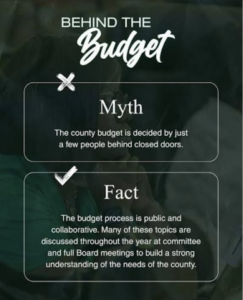
Transparency becomes particularly important when a county is making decisions involving millions of public dollars, which is why residents have opportunities to follow the Hoke County Board of Commissioners and review the documents associated with the budget process. The county held a public hearing on the proposed FY 2026–27 budget during the June 15 commissioners meeting, providing an opportunity for public involvement before final adoption, while county agendas, budget materials and other government documents are available through official county resources. Residents who review these documents can gain a much clearer understanding of what county departments are requesting, how priorities are established and where commissioners are choosing to allocate available resources.
The 2026–27 Hoke County budget ultimately represents a statement about the county’s priorities because every dollar directed toward one responsibility is a dollar that cannot simultaneously be spent somewhere else. Commissioners must balance public safety, education, social services, recreation, infrastructure, administration and future development while considering the financial burden placed on taxpayers, making the annual budget process one of the most consequential responsibilities of county government. Maintaining current services may sound straightforward, but population growth, inflation, employee costs, equipment needs and infrastructure demands can make providing the same level of service more expensive from one year to the next.
For Hoke County residents, the most important question may therefore be not simply how large the county budget is, but whether public resources are producing services and investments that strengthen the community over the long term. Tax dollars help keep county departments operating, support public schools, provide public safety resources, assist families, maintain government services and prepare infrastructure for a community that continues to change, which means residents have a direct interest in understanding how those dollars are being spent. By following budget discussions, reviewing county documents and paying attention to the decisions of the Hoke County Board of Commissioners, residents can move beyond simply receiving a tax bill and become better informed about how their money is helping shape the future of Hoke County.
About The Author