

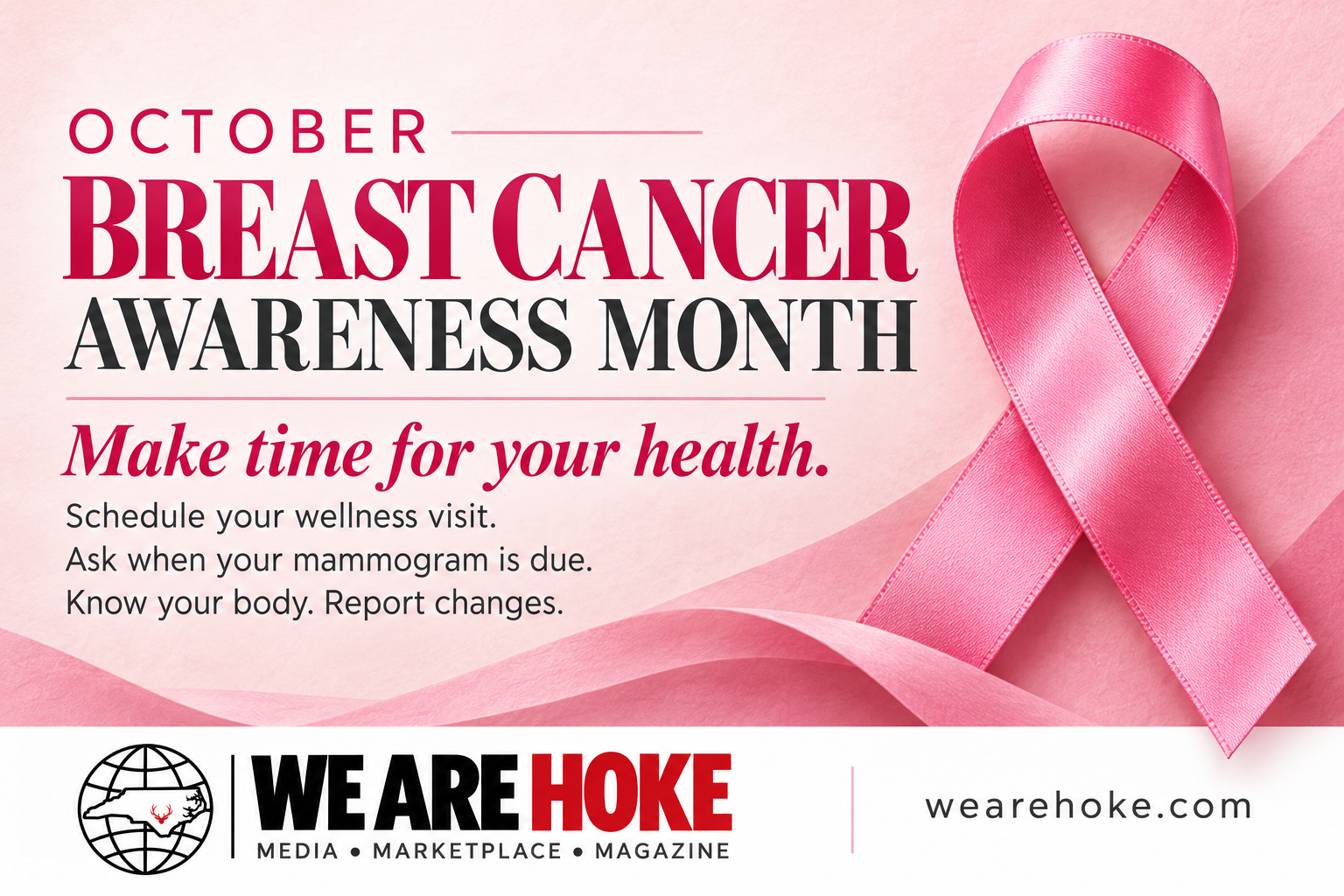
Every October, Breast Cancer Awareness Month brings pink ribbons, community events and heartfelt reminders of the people whose lives have been touched by breast cancer. Behind those symbols is a practical message: make time for recommended screening, learn what is normal for your body and speak with a healthcare professional when something changes.
For families throughout Hoke County and beyond, awareness can begin with a conversation, an appointment or an offer to help someone get to a screening. Supporting breast health also means showing compassion to people receiving treatment, survivors and those living with metastatic breast cancer.
Make Breast Health Part of Your Yearly Care

A yearly wellness appointment offers an opportunity to discuss breast health, review family history and ask whether you are due for a mammogram. It is also a good time to mention symptoms, clarify previous results and make sure any recommended follow-up has been completed.
An annual health visit, a physical breast examination and a screening mammogram serve different purposes. Mammograms use breast X-rays to look for cancer, including changes that may be too small to feel, while physical examinations and self-checks cannot replace recommended imaging. American Cancer Society
Mammogram schedules depend on age, risk and the guidance you follow. For women at average risk, the American Cancer Society recommends annual mammograms at ages 45 through 54, offers the option of annual screening at ages 40 through 44, and allows annual or every-other-year screening from age 55 onward while health and life expectancy support it. The U.S. Preventive Services Task Force recommends mammograms every two years from ages 40 through 74. Discuss the appropriate schedule with your healthcare professional, particularly if your personal or family history suggests higher risk. American Cancer Society
Self-Exams and Breast Self-Awareness
Many people use the term “breast self-exam” to describe checking their breasts for changes. The key message is breast self-awareness: becoming familiar with how your breasts normally look and feel and reporting anything unusual.
You might notice a change while dressing, bathing or looking in a mirror. If you choose to perform deliberate self-checks, ask your healthcare professional for guidance. However, formal routine self-exams have not been shown to reduce breast cancer deaths and are not recommended by the American Cancer Society as routine screening for average-risk women. cancer.org
Knowing your body remains valuable, but feeling no lump does not mean you can skip recommended screening. Likewise, a recent normal mammogram should not lead you to dismiss a new symptom. American Cancer Society
Changes That Deserve Medical Attention
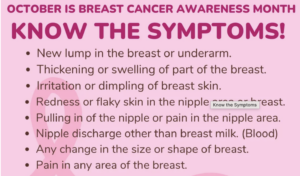
Breast cancer symptoms can include a new lump in the breast or underarm, swelling, skin dimpling, changes in breast shape or size, a nipple pulling inward, unusual nipple discharge, or redness and flaking of breast skin. Breast pain can also warrant evaluation, especially when it is new or persistent.
Many breast changes have causes other than cancer, but a medical evaluation is needed to determine what is happening. Contact your healthcare professional promptly when you notice a concerning change instead of waiting for your next annual appointment or screening date. CDC
Help Make Screening Accessible
Work schedules, caregiving responsibilities, transportation problems and financial concerns can make appointments difficult. A ride, help with childcare or encouragement to make a phone call may give someone the support needed to move forward.

If cost is a concern, ask your local health department or healthcare provider about screening assistance. The CDC’s National Breast and Cervical Cancer Early Detection Program provides free or low-cost screening to eligible women. CDC
Let Awareness Lead to Action
At We Are Hoke, we encourage readers to use Breast Cancer Awareness Month as a reminder to review their screening plans and support neighbors facing breast cancer. Schedule your wellness visit, ask whether your mammogram is due and talk openly about changes you have noticed.
The most meaningful expression of awareness may be an appointment kept, a symptom evaluated or a friend who feels supported through a difficult day.
About The Author